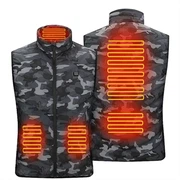

Heated Clothing Safety: CE & UL Certification Guide For EU Sellers
Jul 14, 2025
1. Introduction
As the heated clothing market grows rapidly, especially in colder European regions, consumers demand higher functionality and safety. Heated garments contain batteries, heating elements, and control circuits that pose electrical and chemical risks. EU regulations strictly require sellers to ensure products comply with relevant laws and certification standards. This guide helps European and cross-border B2B sellers (brands, wholesalers, OEM/ODM manufacturers) understand key safety certifications related to heated clothing-particularly CE marking and UL certification-explains regulatory requirements, and provides practical workflows and cost estimates to help your products achieve compliant market entry.
2. Why Safety Certification Matters for Heated Clothing
Heated garments integrate electronic components that carry risks such as overheating, electric shock, fire hazards, and electromagnetic interference. Without thorough safety testing and certification, products risk consumer injury and legal consequences.
| Key Risks | Description | Applicable Standards |
|---|---|---|
| Electric Shock | Risk of user electric shock | EN 60950-1 / EN 62368-1 |
| Overheat & Fire | Heating element temperature anomalies causing fire | UL 2595, LVD Directive |
| Electromagnetic Interference | Disruption to/from other electronic devices | EMC Directive EN 61000 series |
| Hazardous Substances | Presence of toxic heavy metals like lead, mercury | RoHS, REACH |
Compliance ensures customer safety, legal market access, and brand credibility.
3. Major EU Safety Certifications
3.1 CE Marking
- Low Voltage Directive (LVD) 2014/35/EU
Official text - Electromagnetic Compatibility Directive (EMC) 2014/30/EU
Official text - Restriction of Hazardous Substances Directive (RoHS) 2011/65/EU
Official text - REACH Regulation (EC) No 1907/2006
Official text
3.2 Harmonized EU Standards
| Standard | Scope | Description | Reference Link |
|---|---|---|---|
| EN 60950-1 / EN 62368-1 | Electrical Safety | Protection from electric shock, fire hazards | GlobalSpec Overview |
| EN 61000 series | Electromagnetic Compatibility | Limits EMI to ensure device interoperability | EMC Standards Info |
4. UL Certification and Its Importance for EU Sellers
4.1 What is UL?
UL (Underwriters Laboratories) is a leading third-party safety certification body widely recognized in the US and North America.
4.2 UL 2595 Standard
- Overheat protection and temperature control
- Battery safety (short-circuit, overcharge protection)
- Electrical insulation and mechanical connections
4.3 Why Should EU Sellers Care About UL?
- Required for North American market access
- Demonstrates compliance with highest global safety standards
- Avoids redundant testing and saves costs for multi-market entry
5. How to Ensure Compliance for Heated Clothing
| Stage | Key Actions | Goal |
|---|---|---|
| Design Phase | Choose compliant materials; design safety protections (e.g., over-temperature cutoffs) | Reduce safety risks |
| Certification Testing | Partner with certified labs to complete CE and UL tests | Obtain valid certificates |
| Quality Management | Implement strict QC, maintain technical files, prepare conformity declarations | Ensure batch-to-batch safety |
| Documentation | Write user manuals and safety instructions | Comply with regulations, protect users |
6. How Sellers Can Effectively Communicate Safety Certification
- Display Certification Marks: Clear CE and UL marks on product and packaging
- Provide Safety Instructions: Educate customers on proper use and maintenance
- Leverage Certification as a Brand Asset: Use compliance as a selling point to boost trust
7. Conclusion
Safety certification for heated clothing is not just regulatory compliance-it is essential for building brand trust and competitive advantage. Understanding and implementing CE and UL standards, coupled with sound design and quality control, minimizes risk and ensures success in European and global markets.
Appendix: Regulation and Standards Links
| Resource | Link |
|---|---|
| Low Voltage Directive (LVD) 2014/35/EU | https://eur-lex.europa.eu/legal-content/EN/TXT/?uri=CELEX%3A32014L0035 |
| Electromagnetic Compatibility Directive (EMC) 2014/30/EU | https://eur-lex.europa.eu/legal-content/EN/TXT/?uri=CELEX%3A32014L0030 |
| RoHS Directive 2011/65/EU | https://eur-lex.europa.eu/legal-content/EN/TXT/?uri=CELEX%3A32011L0065 |
| REACH Regulation 1907/2006 | https://eur-lex.europa.eu/legal-content/EN/TXT/?uri=CELEX%3A32006R1907 |
| EN 62368-1 Standard Overview | https://standards.globalspec.com/std/14502806/IEC%2062368-1 |
| UL 2595 Standard Overview | https://standardscatalog.ul.com/standards/en/standard_2595_3 |
Attachment 1: Heated Clothing Safety Certification Process (Colored HTML Flowchart)
Heated Clothing Safety Certification Process
- Design Phase
- Select compliant materials and safety design features
- Internal pre-assessment and risk evaluation
- Contact EU notified body → Perform CE standard testing
- Test passed?
- ✔ Yes → Prepare technical documentation & declaration of conformity → Affix CE mark & launch
- ✘ No → Redesign & retest
- Test passed?
- Plan North American sales?
- ✔ Yes → Contact UL authorized lab → Perform UL 2595 testing
- Test passed?
- ✔ Yes → Obtain UL certification, enter NA market
- ✘ No → Redesign & retest
- Test passed?
- ✘ No → End process
- ✔ Yes → Contact UL authorized lab → Perform UL 2595 testing
Attachment 2: Certification Timeline
| Stage | Estimated Duration | Notes |
|---|---|---|
| Design & Preparation | 1–2 months | Material selection & safety design |
| Internal Testing | 2–4 weeks | Functional & safety pre-assessment |
| CE Certification Testing | 6–8 weeks | LVD, EMC, chemical tests |
| Technical Documentation | 1–2 weeks | Declaration & manuals preparation |
| UL Certification Testing | 8–12 weeks | For North American market |
| Certificate Issuance | ~1 week | After successful testing |
Attachment 3: Certification Cost Estimates (EUR)
| Item | Cost Range | Notes |
|---|---|---|
| Materials Testing (RoHS/REACH) | €1,500 – €3,000 | Depending on complexity & batches |
| Electrical Safety Tests (LVD/EN) | €3,000 – €6,000 | Includes shock, fire, mechanical |
| Electromagnetic Compatibility (EMC) | €2,500 – €5,000 | Frequency range & interference level affects cost |
| UL 2595 Testing | €5,000 – €10,000+ | Higher cost due to complexity |
| Technical Documentation | €1,000 – €2,000 | Depends on language & complexity |
| Certification Management | €500 – €1,500 | Consulting and project management |
Attachment 4: Heated Clothing Safety Certification FAQ
Q1: What is the CE Marking and why is CE certification mandatory for heated clothing?
A: The CE Marking indicates that a product complies with the European Union's health, safety, and environmental protection requirements. Heated clothing contains electronic heating elements and batteries that pose electrical safety risks. CE certification ensures the product meets directives such as the Low Voltage Directive (LVD) and Electromagnetic Compatibility (EMC), making it legally sellable within the EU.
Q2: What is the difference between UL certification and CE certification?
A: CE certification is a mandatory conformity mark for the European market covering safety and environmental regulations. UL certification is a third-party safety certification recognized primarily in the United States and North America, focusing on electrical safety and fire prevention. UL 2595 is specifically designed for heated garments. For North American market entry, UL certification is highly recommended.
Q3: How do RoHS and REACH regulations affect heated clothing?
A: RoHS restricts the use of hazardous substances like lead, mercury, and cadmium in electronic products. REACH regulates the registration and safe use of chemical substances. Heated clothing must comply with these regulations to ensure materials and electronic components are environmentally safe and non-toxic.
Q4: What safety tests are typically performed on heated clothing?
A: Typical safety testing includes electrical safety (protection against electric shock and overheating), electromagnetic compatibility (EMC) testing, material chemical analysis for RoHS and REACH compliance, battery safety tests, and mechanical durability assessments.
Q5: How long does the CE certification process generally take?
A: The design and preparation phase typically takes 1–2 months, internal pre-assessment 2–4 weeks, official certification testing (LVD, EMC, etc.) 6–8 weeks, and technical documentation preparation 1–2 weeks - totaling approximately 3–4 months.
Q6: Is UL certification mandatory for heated clothing exported to North America?
A: While not legally mandatory, most major North American retailers and e-commerce platforms require UL certification as a proof of safety and quality. UL 2595 certification significantly boosts market acceptance and consumer trust.
Q7: How can manufacturers maintain safety compliance throughout production?
A: Implement rigorous quality control systems, regularly inspect components and finished products, keep technical documentation updated, and ensure all supplier materials meet RoHS, REACH, and other relevant regulations.
Q8: Are periodic re-tests or audits required after obtaining CE and UL certifications?
A: Yes. CE compliance requires ongoing conformity and may be subject to market surveillance inspections. UL certifications typically involve annual factory inspections and audits to ensure ongoing compliance.
Q9: Which certification bodies or testing labs are recommended?
A: In Europe, notified bodies such as TÜV Rheinland, SGS, and Intertek are widely recognized. For UL certification, UL LLC is the official provider. Choosing labs with heated clothing testing experience is highly recommended.
Q10: What risks do sellers face if heated clothing is non-compliant?
A: Risks include product recalls, fines, sales bans, reputational damage, and potential legal liabilities - all of which can severely impact long-term business viability.